1)Write a sentence that introduces and defines this section.
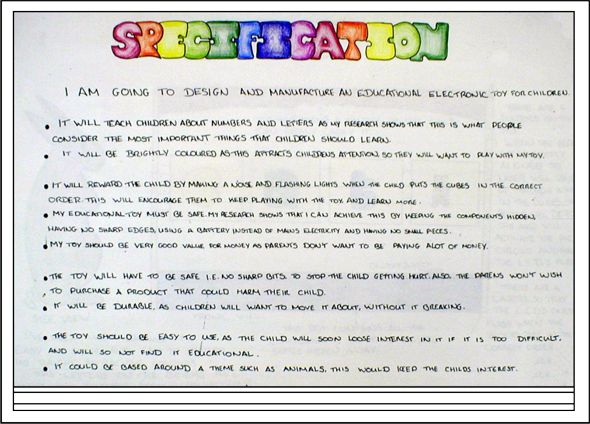
2)Then, create a list of 5-7 design specifications that your final product must have.
3) Justify each design specification.
4) Create TESTS to evaluate your product based on your design specifications. IB Learner Profile: Knowledgeable Learning objective: The student will list the specific requirements that must be met by the product/solution and design tests to evaluate the product/solution against the design specification.
Although you can only partially read the article, I think you will have enough information that you will understand that admissions officers are looking at the "whole" student.
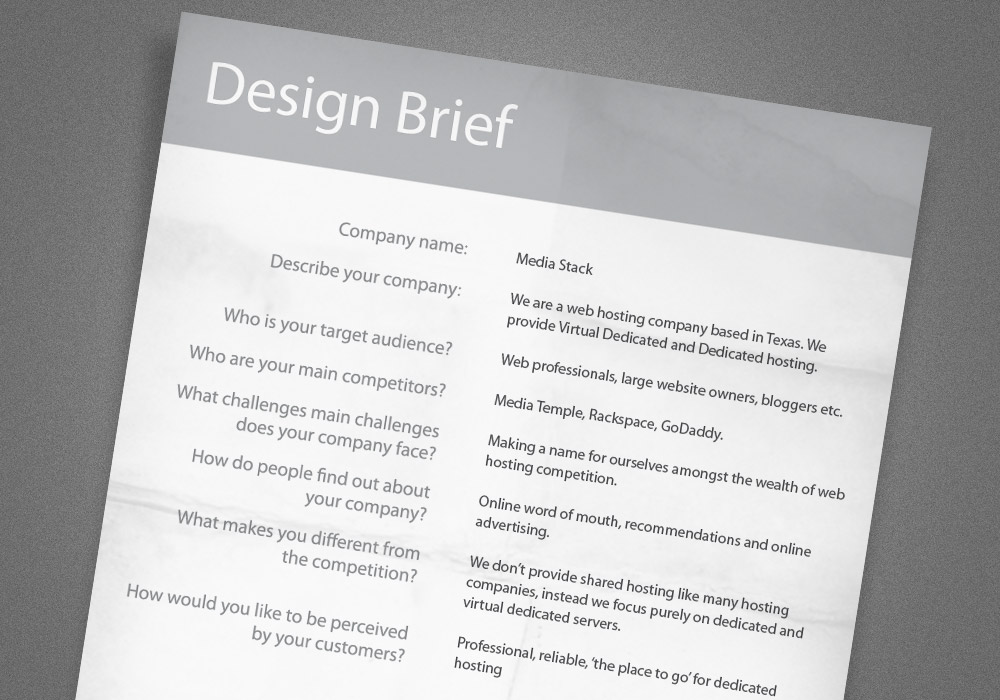
2. Develop A Design Brief
a. Write a sentence to introduce this section of the project.
b. Craft 4-5 questions/areas/topics and conduct research that will help you solve your problem.
IB Learner Profile: Inquirer
Learning objectives-The
student will: independently identify meaningful questions, carrry out
web search, select and organize appropriate sources and evaluate them.
1. Identify the Problem - write 2 paragraphs as an introduction to your research project. (See Investigate Template if you need guidance)
2. Develop A Design Brief
a. Write a sentence to introduce this section of the project.
b. Craft 4-5 questions/areas/topics and conduct research that will help you solve your problem.
IB Learner Profile: Inquirer
Learning objectives-The student will: independently identify meaningful questions, carrry out web search, select and organize appropriate sources and evaluate them.
Welcome to 2013 and Term 2. Our project this term will be a video project which could be used to supplement a university application.
Area of Interaction Focus Approaches to Learning:
Communication: Informing Others
You independently and consistently structure ideas and arguments, both orally and in writing, in a sustained and logical way and support them with relevant examples across the Design Cycle.
You independently show awareness of the need for an effective choice of medium suited to the audience when choosing a tool to create your product/solution.
Significant Concept
The students will gain an understanding that the way you present yourself to others is important and can make a difference.
Year 11, we need to work really hard to reach our unit goal in the allotted time, but I'm sure we can do it.
It will be necessary for you to do homework. If you would like to use the computer room at lunch time, please make sure to talk to me in advance.
Let's begin:
1. Identify the Problem - write 2 paragraphs as an introduction to your research project. (See Investigate Template if you need guidance)
2. Develop A Design Brief
a. Write a sentence to introduce this section of the project.
b. Craft 4-5 questions/areas/topics and conduct research that will help you solve your problem.
IB Learner Profile: Inquirer
Learning objectives-The student will: independently identify meaningful questions, carry out web search, select and organize appropriate sources and evaluate them.
Year 11, Keep working toward your goal. Your Process Journal is an important part of this criterion so please document it thoroughly.
The due date for the Create is: December 12 . This means that you must have your final product complete, the paragraph/s saying if your plan worked and indicating any modifications you made and why you made them, and the Process Journal.
If you have any questions, please feel free to raise your hand.
Please leave a comment on this blog post to acknowledge your understanding of your assignment.
Thank you;-)
IB Learner Profile: Knowledgeable
Learning Objective: The student will 1) use a range of appropriate techniques and equipment competently, 2) follow the plan to produce the product/solution, 3) evaluate the plan and justify any changes to the plan (when necessary), and 4) create a product/solution of appropriate quality.
Now, it's on to the Create. This is the moment you have been waiting for!
CREATE - Criterion D (maximum 6)
According to the IBO:
Students are expected to document, with a series of photographs or a video and a dated record, the process of making their product/solution, including when and how they use tools, materials and techniques.
Students are expected to follow their plan, to evaluate the plan and to justify any changes they make to the plan while they are creating the product/solution. This means that you must have a process journal and that it is a necessary component of this criterion.
To get a 5/6:
The student competently uses appropriate techniques and equipment.
The student follows the plan and justifies any modifications made, resulting in a product/solution of appropriate quality using the resources available.
IB Learner Profile - Knowledgeable
Learning Objective: The student will: use a range of appropriate techniques and equipment competently; ensure a safe working environment for themselves and others; follow the plan to produce the product/soltuion; evaluate the plan and justify any changes to the plan (when necessary); and create a product/solution of appropriate quality.
Year 11, let's take a closer look at our PM work. We´re going to regroup and reorganize.
1. Work Breakdown Structure - Make a graphic (WBS) (this will be very simple as we are primarily concerned with a production plan.
2. Work Package Distribution - Make a list of task for each item in your WBS. Include Time.
3. Gantt Chart - Use template to create a Gantt chart to graph your tasks and time. 4. Write a paragraph stating why you think this plan will work. 5. If you have made any modifications to the plan, please write a paragraph stating this.
Year 11, I think that now we are sorted.
Due Date - end of class on November 16
IB Learner Profile: Thinker
Learning objectives: 1. construct a plan to create the product/solution that has a series of logical steps, 2. construct a plan to create the product/solution that makes effective use of resources and time, 3. evaluate the plan and justify any modifications to the design.
According to MYP Technology, "Students are expected to construct a plan to create their chosen product/solution that has a series of logical steps, and that makes effective use of resources and time.
Students are expected to evaluate the plan and justify any modifications to the design."
To get a 5/6: The student produces a plan that contains a number of detailed, logical steps that describe the use of resources and time. The student critically evaluates the plan and justifies any modifications to the design. Remember to use Project Management tools and vocab;-) IB Learner Profile: Thinker Learning objectives: 1. construct a plan to create the product/solution that has a series of logical steps, 2. construct a plan to create the product/solution that makes effective use of resources and time, 3. evaluate the plan and justify any modifications to the design.
Welcome back Year 11. I hope you had a great break. This class is going to be primarily for information purposes.
Criterion A - Investigate
Criterion B - Design - remember that ALL your designs must be "feasible" designs. That means that each of them must meet all of your design specifications. This is easy to accomplish.
Criterion C - Plan - Project Management - You are to plan your work for your business card project using the tools and concepts from Project Management.
Some go to terms are:
Work Breakdown Structure (WBS) - a structural way of identifying the work to be done by breaking down work into Work Packages (WPs) (tasks to be done);
Work Package Description (WPD) - a description of the Work Packages (tasks);
Gantt Chart - a graphical way of displaying the work to be done (taken from the WBS).
Project Management
What is Project Management? According to Wikipedia, "Project management is the discipline of planning, organizing, securing, managing, leading, and controlling resources to achieve specific goals. A project is a temporary endeavor with a defined beginning and end (usually time-constrained, and often constrained by funding or deliverables),[1] undertaken to meet unique goals and objectives,[2] typically to bring about beneficial change or added value." http://en.wikipedia.org/wiki/Project_management
We are generally concerned with:
Planning and design
After the initiation stage, the project is planned to an appropriate level of detail (see example of a flow-chart).[24] The main purpose is to plan time, cost and resources adequately to estimate the work needed and to effectively manage risk during project execution. As with the Initiation process group, a failure to adequately plan greatly reduces the project's chances of successfully accomplishing its goals.
determining how to plan (e.g. by level of detail or rolling wave);
developing the scope statement;
selecting the planning team;
identifying deliverables and creating the work breakdown structure;
identifying the activities needed to complete those deliverables and networking the activities in their logical sequence;
estimating the resource requirements for the activities;
estimating time and cost for activities;
developing the schedule;
developing the budget;
risk planning;
gaining formal approval to begin work.
Why Project Planning is useful:
A key to successful project
scheduling is to break down the project goals into tasks BEFORE you consider
delivery dates, resource constraints, specific named resources, or task
dependencies. This helps you to objectively identify all of the work necessary
without subconsciously leaving out real work in order to fit date
constraints.
The WBS step helps
accomplish the following key objectives:
§
Develops an objective, rational view
of the amount of work required
§
Helps team grasp the skills required
and amount of resources required for the project
§
Provides a clear framework for
assigning to individuals a clear task definition and delegate the
responsibility for completion
§
Lays a foundation for analyzing the
task dependencies and for isolating and managing risks
§
Lays a foundation for developing a
bottom-up estimate for the project schedule
§
Allows tradeoffs to be made
consciously and with the proper consensus involved.
Links for you to check out to successfully execute your tasks.
Learning objectives:
1. construct a plan to create the product/solution that has a series of logical steps, 2. construct a plan to create the product/solution that makes effective use of resources and time, 3. evaluate the plan and justify any modifications to the design.
Next is the DESIGN (Criterion B) stage if the Design Cycle. Students are expected to generate several feasible designs that meet the design specification and to evaluate these against the design specification. Students are then expected to select one design, justify their choice and evaluate this in detail against the design specification. Show your ideas to your cooperating teacher. To get a 5/6: The student generates a range of feasible designs, each evaluated against the design specification. The student justifies the chosen design and evaluates it fully and critically against the design specification.
FYI (For your information) Above is an example of a design of a grammar review quiz/game that I made. Click on the above graphic to enlarge it and look carefully at the image. Can you easily understand how this quiz/game will function?
IB Learner Profile: Knowledgable Learning Objective - The student will: generate several feasible designs that meet the design specification; evaluate the designs against the specifications; select one design and justify its choice.
Madalena, this term you will be working on an advertising project this term and you will be creating a business card. The unit of work and other information can be found on the Year 10 blog: http://ois-it10.blogspot.com
You will need to use in-text referencing and build a bibliography.
For today, please copy and past the web address of the web sites that you use to do your research.
When conducting research remember to keep it relevant. Ask questions that are going to help you solve your problem. It is this way that you will learn effective and efficient researching skills.
Starting Questions: Make a list of questions you will have to find answers to. You should find the following prompts useful: Why. . .? When . . .? Where . . .? What . . .? How many. . .? How often . . .? How much . . .? Keep your questions relevant so you don't waste time;-)
Use the Unit of Work to help guide you through the Investigation.
Sources of Information: Carefully consider the sources of information that you use. Use experts in the field.
don't forget . . .
1. Make sure your research is pertinent
2. Make sure your research is complete - it's your responsibility to be clear and concise
3. You need to use a range of sources of information
4. Make sure your research work is cearly and attractively presented
possible language to use in your written work . . .
From my research I found out . . .
I have discovered that . . .
My conclusions are that . . .
I have kept my research relevant by . . .
Today's assignment: Please research the following items:
Define “Business Card” (what is it?, how can it help you?)
Research Business Cards (what makes a good business card?, effective business card design)
IB Learner Profile: Inquirer Learning objectives: independently identify meaningful questions, carrry out web search, select and organize appropriate sources and evaluate them.
The third step of the Investigation is 3. Formulate a Design Specification.
The IBO defines Design Specification as: A detailed description of the conditions, requirements and restrictions with which a design must comply. This is a precise and accurate list of facts such as conditions, dimensions, materials, process and methods that are important for the designer and for the user. All appropriate solutions will need to comply with the design specification.
To get a 5/6 the student: describes detailed methods for appropriate testing to evaluate the product/solution against the design specification.
Your task is to create a detailed list of design specifications and justify your choice. Then create tests to evaluate your product.
If you have finished your Investigation I suggest that you familiarize yourself with the tool that you will ultimately use. In other words, please do a tutorial to help you be able to use the programme you chose to its fullest potential;-)
IB Learner Profile: Inquirer
Learning objective: The student will list the specific requirements that must be met by the product/solution and design tests to evaluate the product/solution against the design specification.
Year 11, the third step of the Investigation is 3. Formulate a Design Specification.
The IBO defines Design Specification as: A detailed description of the conditions, requirements and restrictions with which a design must comply. This is a precise and accurate list of facts such as conditions, dimensions, materials, process and methods that are important for the designer and for the user. All appropriate solutions will need to comply with the design specification.
To get a 5/6 the student: describes detailed methods for appropriate testing to evaluate the product/solution against the design specification.
Remember that the Design Specifications are an outgrowth of your research.
Your task is to create a detailed list of design specifications and justify your choice. Then create tests to evaluate your product.
IB Learner Profile: Inquirer
Learning objective: The student will list the specific requirements that must be met by the product/solution and design tests to evaluate the product/solution against the design specification.
Year 11, let's take a moment to evaluate some previous projects against the assessment rubric, then we will continue with our research.
IB Learner Profile: Inquirer
Learning Objective - The student will: independently identify meaningful questions, carry out web research, select and organize appropriate sources and evaluate them.
Now, onto
2. Develop A Design Brief - this is the part of the project where you conduct research to help you solve your problem. Introduce this section of the project by writing a sentence or two explaining what you will do in this section.
Remember, this is the section of the Investigate (Criterion A) where you "ask" and "answer" questions and document your learning each step of the way. Use in-text referencing and include a proper bibliography. In addition, you must "evaluate" your sources. If possible use primary sources. To learn more about evaluating your sources please click here .
It is important for you to be able to show a logical progression of your work. For example, you cannot look at tools to create a teaching aid before defining what a teaching aid is or looking a examples of teaching aids.
To achieve full marks in this section you must critically investigate the problem, evaluating information from a broad range of appropriate, acknowledged sources.
IB Learner Profile: Inquirer
Learning Objective - The student will: independently identify meaningful questions, carry out web research, select and organize appropriate sources and evaluate them.
The INVESTIGATE (Criterion A) step of the Design Cycle consists of 3 tasks:
1. Identify the problem,
2. Develop a Design Brief,
3. Formulate a Design Specification.
Year 11, let's continue with the introduction to your project (1. Identify the problem).
This is to be finished this period or for homework. If necessary, you can insert the details of your teaching aid and cooperating teacher at a later date.
If you have not approached a teacher yet, please do so by Friday. Ms. Monteiro (Year 7 teacher) would be happy to participate and she can accommodate 2 students;-)
IB Learner Profile: Inquirer
Learning objective: evaluate the importance of the problem for life, society and the environment and outline the design brief.
1. Identify the Problem
What is a design brief? Click here
It's important to organise your document in a formal way. This is the introduction to your project.
Students identify the problem to be solved.
- evaluate the importance of the problem for life, society and the environment
- outline the design brief
Let's look at the "Identify the Problem" tab above for ideas on how to proceed.
According to the MYP Technology Assessment Rubric . . .
To get a 1/2: The student states the problem.
To get a 3/4: The student describes the problem, mentioning its relevance.
To get a 5/6: The student explains the problem, discussing its relevance.
Now, look at this vocabulary: states, describes, explains. How are they different?
Look at these words: mentioning, discussing. How are they different?
MYP definitions: Describe: To give a detailed account Explain: To give a clear account including causes and reasons or mechanisms. Discuss: To give an account including, where possible, a range of arguments for and against the relative importance of various factors and comparisons of alternative hypotheses.
Learning objective: evaluate the importance of the problem for life, society and the environment and outline the design brief.
Year 11, one of the primary focuses of the MYP Design Cycle is research. It is important to know how to conduct research and how to summarize your findings.
Let's take a few minutes to go over the exercise on the page entitled, "Writing a summary".
As we continue along this project we will discuss phrases that will help you record your findings clearly and appropriately.
Year 11 one of the main goals of MYP Technology is for you to become a problem solver.
We are coming to the close of the term. Next week is Exam Week so let's check to see if you have handed in all your work. We still have a bit of time to enhance your work to earn better grades.
Learning Objective: The student will: use a range of appropriate techniques and equipment competently; ensure a safe working environment for themselves and others; and create a product/solution of appropriate quality.
You should now be working on the Create - Criterion D.
According to the IBO:
Students are expected to document, with a series of photographs or a video and a dated record, the process of making their product/solution, including when and how they use tools, materials and techniques. Students are expected to follow their plan, to evaluate the plan and to justify any changes they make to the plan while they are creating the product/solution. This means that you must have a process journal and that it is a necessary component of this criterion.
Please look at the Stop Motion Video Rubric: https://www.box.com/s/bc6f80265cfae8b683bc Learning Objective: The student will: use a range of appropriate techniques and equipment competently; ensure a safe working environment for themselves and others; and create a product/solution of appropriate quality.
According to the IBO, " Students are expected to construct a plan to create their chosen product/solution that has a series of logical steps, and that makes effective use of resources and time. Students are expected to evaluate the plan and justify any modifications to the design."
Plan - your plan should basically consist of a timeline saying how and when you
will complete your project. It should also include a section that lists
details/steps (film, build movie, add music, etc) on when you will do what- well I hope you get the idea.
IB Learner Profile:
Learning Objective for Plan: 1. construct a plan to create the stop motion video that has a series of logical steps, 2. construct a plan to create the stop motion video that makes effective use of resources and time and 3.evaluate the plan and justify any modifications to the design.
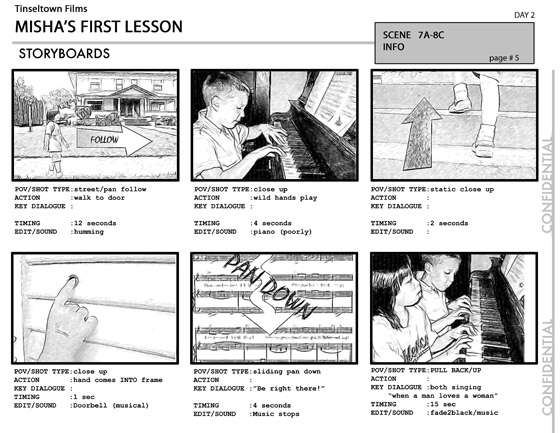
What is a storyboard? According to Wikipedia, "Storyboards are graphic organizers in the form of illustrations or images displayed in sequence for the purpose of pre-visualizing a motion picture, animation, ..." This is particularly pertinent in relation to our current project.
Creating a storyboard will help you plan your animation out shot by shot. You can make changes to your storyboard before you start animating, instead of after you have begun your video potentially saving you loads of time. (For more info check out this link: http://accad.osu.edu/womenandtech/Storyboard%20Resource/.)
Do a quick keyword search (storyboard template) on Google to get ideas to produce your own storyboard.
Now, onto the DESIGN (Criterion B). You need to produce two (2) different complete storyboards for you movie and to evaluate each against your design specification. Then you need to choose one of the designs and write a paragraph justifying your choice.
According to the IBO:
"Students are expected to generate several feasible designs that meet the design specification and to evaluate these against the design specification.
Students are then expected to select one design, justify their choice and evaluate this in detail against the design specification.
To get a 5/6: The student generates a range of feasible designs, each evaluated against the design specification. The student justifies the chosen design and evaluates it fully and critically against the design specification."
IB Learner Profile: Risk-taker
Learning Objective: generate several feasible designs that meet the design specification; evaluate the designs against the specification; select one design andjustify its choice.
Our unit question is: How can I use Computer Technology to creatively tell a story?
Area of Interaction: Human Ingenuity
1. Identify the Problem (2 paragraphs)
1. The best way to begin your Investigation is by writing a paragraph that explains the problem as you understand it. (State problem, restate problem in your own words, say why this project is relevant, say how you will solve the problem, say who your customer is). 2. Then write a paragraph to connect your project to an Area of Interaction (Human Ingenuity)
Click here for the Identify the Problem Template. 2. Develop a Design Brief (Ask and answer the following questions or look at the following research topics to help you solve your problem)
Write a sentence to introduce this section of the project (ex: To drive my Investigation I will conduct the following research.)
1. What is stop motion? Research and explain in your own words.
2. What are the elements of a story?
3. Look at 4 stop motion videos to gather information and ideas to make your own video?
(What worked? What didn't? What did you like? What didn't you like? What ideas can you use?
4. What techniques do I need to know to create a stop motion video? (Look at a tutorial).
5. What video host will you use? (Look at 2, justify choice)
Learning objectives: independently identify meaningful questions, carrry out web search, select and organize appropriate sources and evaluate them.
Year 11, Let's begin the Investigation. Although you will be working with a partner(s), the Investigation will be done individually. This will give each of you a broader base of knowledge to bring to your team.
Term 3 data:
Unit Question - How can I use CT to creatively tell a story?
AOI - Human Ingenuity?
Year 11, Here we go again. On to our final project. Let's talk about it and build it together. We're going to do a stop motion film. Let's look at the time lapse film above.
What is it? Stop motion (also known as stop action) is an animation technique to make a physically manipulated object appear to move on its own. The object is moved in small increments between individually photographed frames, creating the illusion of movement when the series of frames is played as a continuous sequence.http://en.wikipedia.org/wiki/Stop_motion
According to the IBO, "Students are expected to evaluate the product/solution against the design specification in an objective manner based on testing, and to evaluate its impact on life, society and/or the environment. They are expected to explain how the product/solution could be improved as a result of these evaluations.
Students are expected to evaluate their own performance at each stage of the design cycle and to suggest ways in which their performance could be improved."
To get full marks the student:
evaluates the success of the product/solution in an objective manner based on the results of testing, and the views of the intended users,
provides an evaluation of his or her own performance at each stage of the design cycle and suggests improvements,
provides an appropriate evaluation of the impact of the product/solution on life, society and/or the environment.
Let's recap what is needed in the Evaluate (Criterion E).
1. Print the questionnaire (that you created in the Investigate) and show your video to 5 people, preferably adults (parents, family members, neighbours, teachers) and ask them to answer your questionnaire. 2. Write a paragraph to "analyze" the feedback. In other words write about the scores that you received and say how your video could be improved. (Use phrases like: Based on my feedback I can conclude . . .) 3. Evaluate your performance at each of these stages of the design cycle: Investigate, Design, Plan, Create AND suggest ways that you can improve your performance. (You need 4 paragraphs here). 4. Write a final paragraph saying if you accomplished your goal and what impact it will have. (In other words, look at the unit question - were you successful? Explain. Relate back to the Area of Interaction.) Remember this is the final paragraph of your research project. It should finalize the project.
Please leave a comment on this post to acknowledge that you understand your assignment. Thanks so much for that;-)
IB Learner Profile: Reflective
Learning objective: carry out tests to evaluate the product/solution against the design specification; evaluate their perforance at each stage of the design cycle and suggest ways in which their perforance could be improved; evaluate the impact of the product/solution on individuals and/or society.
According to the IBO, "Students are expected to evaluate the product/solution against the design specification in an objective manner based on testing, and to evaluate its impact on life, society and/or the environment. They are expected to explain how the product/solution could be improved as a result of these evaluations.
Students are expected to evaluate their own performance at each stage of the design cycle and to suggest ways in which their performance could be improved."
To get full marks the student:
evaluates the success of the product/solution in an objective manner based on the results of testing, and the views of the intended users,
provides an evaluation of his or her own performance at each stage of the design cycle and suggests improvements,
provides an appropriate evaluation of the impact of the product/solution on life, society and/or the environment.
Let's recap what is needed in the Evaluate (Criterion E).
1. Print the questionnaire (that you created in the Investigate) and show your video to 5 people, preferably adults (parents, family members, neighbours, teachers) and ask them to answer your questionnaire. 2. Write a paragraph to "analyze" the feedback. In other words write about the scores that you received and say how your video could be improved. (Use phrases like: Based on my feedback I can conclude . . .) 3. Evaluate your performance at each of these stages of the design cycle: Investigate, Design, Plan, Create AND suggest ways that you can improve your performance. (You need 4 paragraphs here). 4. Write a final paragraph saying if you accomplished your goal and what impact it will have. (In other words, look at the unit question - were you successful? Explain. Relate back to the Area of Interaction.) Remember this is the final paragraph of your research project. It should finalize the project.
I will also need your Create (Criterion D) on or before March 9. (Video, Process Journal and Documention)
Please leave a comment on this post to acknowledge that you understand your assignment. Thanks so much for that;-)
IB Learner Profile: Reflective
Learning objective: carry out tests to evaluate the product/solution against the design specification; evaluate their perforance at each stage of the design cycle and suggest ways in which their perforance could be improved; evaluate the impact of the product/solution on individuals and/or society.
Learning Objective: The student will: use a range of appropriate techniques and equipment competently; ensure a safe working environment for themselves and others; follow the plan to produce the product/soltuion; evaluate the plan and justify any changes to the plan (when necessary); and create a product/solution of appropriate quality.
Year 11, welcome back. Hope you had an awesome break.
The woman in the photo above hired someone on the basis of a video link that she included when applying for a job. Read about it here: http://finance.yahoo.com/news/remarkable-hiring-stories.html . Thinking outside the box can really help you stand out in a positive way.
Your re-worked Investigations are due on Friday. Please, PLEase, PLEASE take advantage of this opportunity to make corrections and raise your Investigate grade. You can come in to work on your project during break and lunch this week.
You should now be working on the Create - Criterion D.
According to the IBO:
Students are expected to document, with a series of photographs or a video and a dated record, the process of making their product/solution, including when and how they use tools, materials and techniques. Students are expected to follow their plan, to evaluate the plan and to justify any changes they make to the plan while they are creating the product/solution. This means that you must have a process journal and that it is a necessary component of this criterion.
To get a 5/6:
The student competently uses appropriate techniques and equipment.
The student follows the plan and justifies any modifications made, resulting in a product/solution of appropriate quality using the resources available.
Please leave a comment on this post to acknowledge that you understand your assignment and an appropriate design specification. Learning Objective: The student will: use a range of appropriate techniques and equipment competently; ensure a safe working environment for themselves and others; follow the plan to produce the product/soltuion; evaluate the plan and justify any changes to the plan (when necessary); and create a product/solution of appropriate quality.